
Caro Leader,
oggi parliamo di un rito che quasi tutte le aziende praticano, e di cui quasi tutti i leader diffidano in privato: la valutazione delle performance.
Il problema
Ogni stagione di valutazioni, i manager si siedono per dare un voto alle proprie persone, come se la performance fosse una quantità pulita e misurabile, leggibile come un termometro. Non lo è. Eppure l'intero sistema si basa sull'idea che un manager possa guardare il lavoro di qualcuno e produrre un numero affidabile e oggettivo. I dipendenti escono dalle valutazioni più spesso confusi o demotivati che motivati, e la maggior parte dei leader lo ha sentito senza mai riuscire a spiegarsi esattamente perché.
Un esempio
Pensa a Marta (di fantasia, ma il pattern lo riconoscerai). Ogni anno passa ore a calibrare i voti del suo team prima del ciclo di valutazioni, tormentandosi se qualcuno meriti un 3 o un 4. Quando confronta le sue valutazioni con quelle di un manager collega che ha lavorato con la stessa persona su un progetto condiviso, i voti coincidono a malapena. Marta pensa di che sta sbagliando qualcosa sul proprio team. In realtà sta incontrando un limite che non ha nulla a che fare con il suo giudizio e tutto a che fare con come funziona il fatto di dare un voto.
Cosa dice la ricerca
Nel loro libro Nine Lies About Work: A Freethinking Leader's Guide to the Real World, Marcus Buckingham e Ashley Goodall individuano nove convinzioni molto diffuse sul mondo del lavoro, dalla cultura aziendale alla definizione degli obiettivi fino alla leadership stessa, e dimostrano perché ognuna sia sbagliata. La lettera di oggi riguarda la bugia numero sei: che le persone possano valutare in modo affidabile la performance di altre persone. Buckingham e Goodall smontano questa convinzione con dati che quasi nessuna organizzazione mette mai in discussione. La ricerca alla base, inclusi gli studi di Michael Mount e colleghi, ha trovato che la maggior parte della varianza in una valutazione dipende dalle tendenze di chi valuta, non da chi viene valutato.
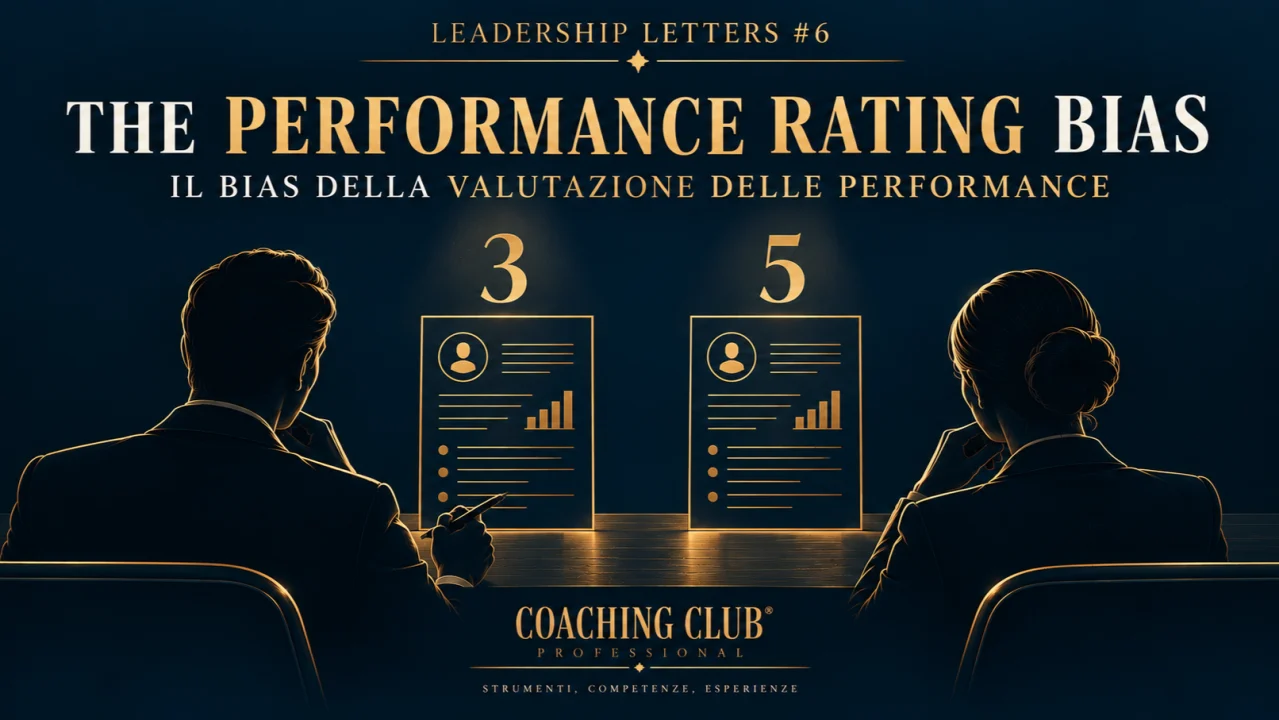
Un esempio concreto rende l'idea meglio di ogni statistica: immagina lo stesso identico lavoro — stesso progetto, stessa presentazione, stessi risultati — mostrato a due manager diversi. Ti aspetteresti voti simili, visto che il lavoro è identico. Invece uno dà un 3, l'altro un 5. Non perché il lavoro sia cambiato nel frattempo, ma perché uno dei due è per natura più severo, l'altro più generoso; uno premia la precisione, l'altro l'iniziativa. Il voto racconta più il carattere di chi valuta che la qualità reale del lavoro.
Questo è ciò che il libro chiama l'effetto del valutatore idiosincratico, e significa che la maggior parte dei sistemi di valutazione misura più chi valuta che chi viene valutato. La soluzione proposta da Buckingham e Goodall non è una scala migliore o più riunioni di calibrazione. È abbandonare del tutto il voto, a favore di domande frequenti, specifiche e orientate al futuro, a cui un manager può rispondere con onestà su qualcuno con cui lavora davvero: cosa hai fatto questa settimana che si è distinto, dove ti sei bloccato, di cosa hai bisogno da me adesso.
Anche le altre otto bugie sono scomode allo stesso modo, e meritano di essere guardate una per una. Sei sicuro che vinca sempre chi ha il piano migliore? Che i leader più forti siano quelli capaci di far discendere obiettivi chiari in tutta l'organizzazione? Che le persone migliori di un team siano quelle più complete, equilibrate su ogni fronte? Che ciò di cui le persone hanno davvero bisogno sia più feedback? Che valga la pena valutare il "potenziale" di qualcuno? Che l'obiettivo sia trovare un equilibrio tra vita e lavoro? Che la leadership sia, in fondo, un insieme di qualità che si possono elencare e verificare una per una? Ognuna di queste convinzioni, per quanto solida sembri, è una bugia — e la verità che la smentisce è spesso più sorprendente della domanda stessa.
Le trovi tutte e nove nel libro qui e nell'esercizio che ho creato per te.
La soluzione da applicare
Smetti di cercare di rendere più accurate le tue valutazioni e inizia invece a fare domande migliori. Un manager non può giudicare in modo affidabile il livello astratto di performance di qualcuno, ma può descrivere in modo affidabile ciò che ha personalmente osservato e sentito riguardo al lavoro che ha davanti. Questo spostamento, dal valutare la persona al descrivere la propria reazione a un lavoro specifico, è ciò che dà davvero alle persone qualcosa di utilizzabile.
Qui uno strumento come l'LC360°, di cui Coaching Club Professional è distributore ufficiale in Italia, diventa davvero utile: invece di affidarsi al singolo voto idiosincratico di un manager, raccoglie contributi strutturati da più persone su comportamenti specifici osservati. Non elimina il bias del valutatore, ma distribuire il giudizio su più osservatori, ancorato a comportamenti concreti invece che a tratti astratti, restituisce un quadro molto più vicino alla realtà di quanto qualsiasi singola valutazione potrà mai fare.
Il tuo esercizio
Prenditi dieci minuti, oggi, prima di chiudere questa lettera.
Pensa alla tua prossima conversazione di crescita con qualcuno del tuo team. Invece di preparare un voto o una valutazione, scrivi tre domande che farai al suo posto.
Vai qui per completare l'esercizio
Se conosci un leader che teme la stagione delle valutazioni tanto quanto il suo team, inoltragli questa lettera.
Con stima, Massimiliano
Dr. Massimiliano Poltroni — Coaching Club Professional
Bibliografia
Buckingham, M., & Goodall, A. (2019). Nine Lies About Work: A Freethinking Leader's Guide to the Real World. Harvard Business Review Press. Scullen, S. E., Mount, M. K., & Goff, M. (2000). Understanding the latent structure of job performance ratings. Journal of Applied Psychology, 85(6), 956–970.
Read in English
Dear Leader,
Today we're talking about a ritual almost every company runs, and almost every leader privately distrusts: the performance review.
The problem
Every review season, managers sit down to rate their people on a scale, as if performance were a clean, measurable quantity you could read off like a thermometer. It isn't. Yet the whole system is built on the assumption that a manager can look at someone's work and produce a reliable, objective number. Employees walk away from reviews confused or demoralized more often than motivated, and most leaders have felt this without ever being able to say exactly why.
An example
Think of Marta (invented, but you'll recognize the pattern). Every year she spends hours calibrating scores for her team before the review cycle, agonizing over whether someone deserves a 3 or a 4. When she compares notes with a peer manager who worked with the same person on a shared project, their ratings barely match. Marta assumes she must be missing something about her own team. In reality, she's running into a limit that has nothing to do with her judgment and everything to do with how rating works.
What the research says
In their book Nine Lies About Work: A Freethinking Leader's Guide to the Real World, Marcus Buckingham and Ashley Goodall identify nine widely held beliefs about the workplace, from culture to goal-setting to leadership itself, and show why each one is wrong. Today's letter is about lie number six: that people can reliably rate other people's performance. Buckingham and Goodall dismantle this belief with data most organizations never question. The research behind it, including work by Michael Mount and colleagues, found that most of the variance in a performance rating comes from the rater's own tendencies, not from the person being rated. Give the same person's work to two different managers and you'll often get two different scores, not because performance changed, but because the rater did.
A concrete example makes this clearer than any statistic: imagine the exact same piece of work, same project, same presentation, same results, shown to two different managers. You'd expect similar scores, since the work is identical. Instead, one gives it a 3, the other a 5. Not because the work changed in between, but because one of them is naturally stricter, the other more generous; one rewards precision, the other initiative. The score tells you more about the rater's character than about the actual quality of the work.
This is what the book calls the idiosyncratic rater effect, and it means most rating systems are measuring the rater more than the ratee. The fix Buckingham and Goodall propose isn't a better scale or more calibration meetings. It's dropping the rating altogether in favor of frequent, specific, forward-looking questions a manager can answer honestly about someone they actually work with: what did you do that stood out this week, where did you get stuck, what do you need from me right now.
The other eight lies are just as uncomfortable, and worth a look on their own. Are you sure the best plan always wins? That the strongest leaders are the ones who cascade clear goals across the whole organization? That the best people on a team are the most well-rounded ones? That what people really need is more feedback? That it's worth evaluating someone's "potential"? That the goal is finding a balance between work and life? That leadership, at bottom, is a set of qualities you can list and check off one by one? Each of these beliefs, however solid it sounds, is a lie, and the truth behind it is usually more surprising than the question itself.
You'll find all nine explored in the book, and we're building a practical exercise around each one for the course library, starting with this one.
The solution to apply
Stop trying to make your ratings more accurate and start asking better questions instead. A manager can't reliably judge someone's abstract performance level, but they can reliably describe what they personally observed and felt about the work in front of them. That shift, from evaluating the person to describing your own reaction to specific work, is what actually gives people something they can use.
Here's where a tool like LC360°, for which Coaching Club Professional is the official distributor in Italy, becomes genuinely useful: instead of relying on one manager's single, idiosyncratic rating, it gathers structured input from several people around specific observed behaviors. It doesn't eliminate rater bias, but spreading the judgment across more observers, anchored to concrete behaviors instead of abstract traits, gives you something far closer to a real picture than any single review ever could.
Your exercise
Take ten minutes, today, before you close this letter.
Think of your next "how am I doing" conversation with someone on your team. Instead of preparing a rating or an evaluation, write down three questions you'll ask instead: what went well this week, where did you get stuck, what do you need from me. Notice, the next time you actually have that conversation, how different the answers feel from the ones a standard review usually produces.
📖 If you want to read Buckingham and Goodall's full argument, and the other eight lies, the book is here: https://link.amazon/B03ohDtxa
📝 The practical exercise for this letter, three questions to replace your next rating, with a downloadable PDF worksheet, is here: https://biz.coachingclub.pro/rating-performance-bias-page
If you know a leader who dreads review season as much as their team does, forward them this letter.
With respect, Massimiliano
Dr. Massimiliano Poltroni — Coaching Club Professional
References
Buckingham, M., & Goodall, A. (2019). Nine Lies About Work: A Freethinking Leader's Guide to the Real World. Harvard Business Review Press. Scullen, S. E., Mount, M. K., & Goff, M. (2000). Understanding the latent structure of job performance ratings. Journal of Applied Psychology, 85(6), 956–970.