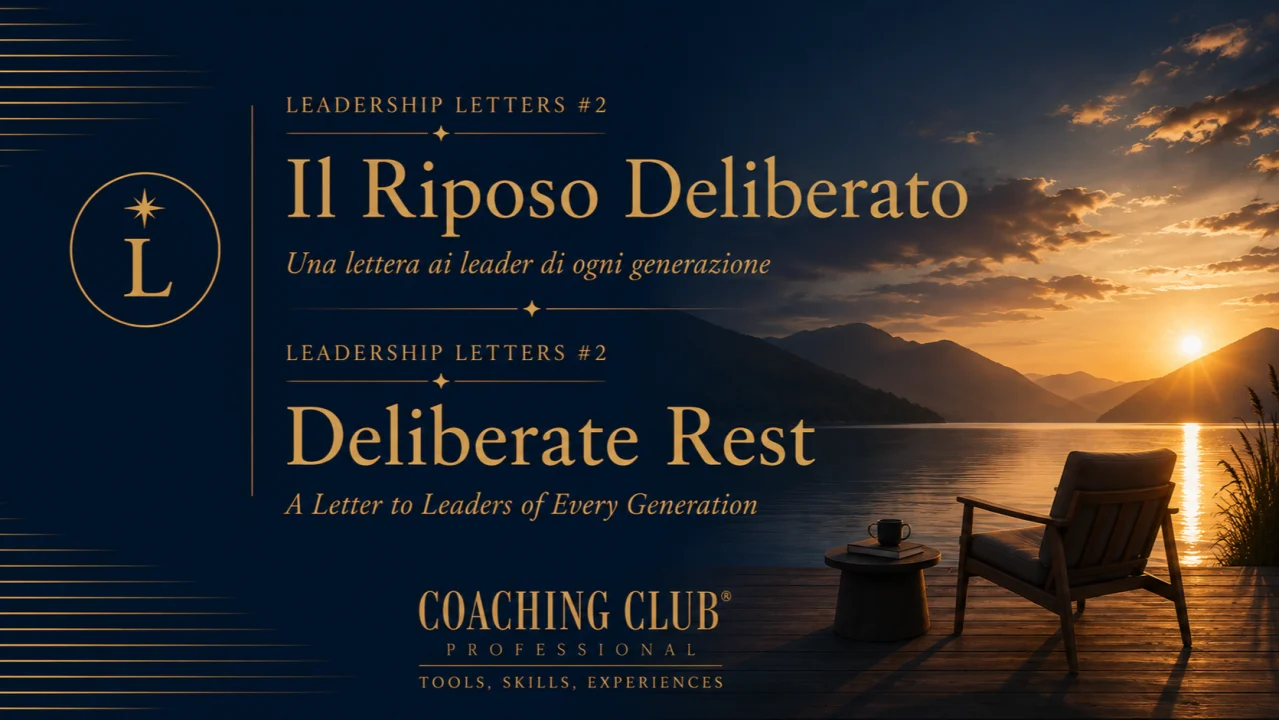
Caro Leader,
eccoci al primo appuntamento regolare del mercoledì. Oggi è il 19 agosto, e se stai leggendo questa lettera da uno smartphone mentre sei — o dovresti essere — in ferie, il tema di oggi è pensato esattamente per te.
Il problema
C'è un'equazione silenziosa che quasi tutti i leader portano dentro senza averla mai scelta: fermarsi equivale a valere di meno. Non lo diresti mai ad alta voce, ma lo vivi ogni volta che controlli la mail "solo un attimo" durante le ferie, che rispondi a un messaggio del team alle 22 di un sabato, che ti senti in colpa a spegnere davvero il telefono. Il problema non è che lavori troppo. È che hai imparato ad associare il riposo all'irrilevanza, e quell'associazione ti sta costando la lucidità che ti serve per guidare bene.
Un esempio
Pensa a Elena (anche qui, il nome è di fantasia, il pattern no). Elena dirige un team di quaranta persone. Ogni agosto si promette la stessa cosa: due settimane vere, offline. Ogni agosto, entro il terzo giorno, ha già riaperto la mail "per controllare". Non perché ci sia un'emergenza; quasi mai c'è. Ma perché il silenzio del telefono le genera un'ansia più forte della stanchezza che dovrebbe smaltire. A settembre torna con l'abbronzatura ma senza essersi davvero ricaricata, e lo sa. Il problema di Elena non è la gestione del tempo. È che non si è mai permessa di credere che fermarsi fosse un atto produttivo, non una sua mancanza.
Cosa dice la ricerca
Qui la ricerca smentisce un'intuizione che diamo quasi tutti per scontata. Nel suo libro Rest: Why You Get More Done When You Work Less, Alex Soojung-Kim Pang analizza le abitudini di scienziati, scrittori e artisti che hanno prodotto lavoro straordinario per decenni — Darwin, Poincaré, molti premi Nobel — e trova un pattern sorprendentemente coerente: quasi nessuno di loro lavorava più di quattro ore concentrate al giorno. Il resto del tempo era riposo strutturato e deliberato, non tempo vuoto: passeggiate, sonnellini programmati, pause fisse. Darwin, per dire, organizzava le sue giornate di ricerca in tre blocchi di novanta minuti — il resto era cammino, riposo, famiglia.
Il punto centrale del libro è che il cervello non smette di lavorare quando ti fermi: la cosiddetta rete neurale di default — quella che si attiva proprio nei momenti di riposo apparente — è dove avviene buona parte dell'integrazione delle idee, delle intuizioni, delle connessioni che sembrano arrivare "dal nulla" sotto la doccia o durante una camminata. Il riposo non interrompe il lavoro cognitivo. Ne è la seconda metà.
Chi fatica di più a permetterselo, nella nostra esperienza di coaching, spesso mostra un profilo preciso nell'area dell'autoregolazione misurata dall'EQ-SWOT® (il nostro assessment sul Quoziente Emotivo): alta capacità di razionalizzare lo stress che provano gli altri, dando consigli, ma bassa capacità di applicare la stessa cura a sé stesso. Sono le persone più brave a dire agli altri "stacca, ne hai bisogno" e le meno capaci di ascoltare lo stesso consiglio.
La soluzione da applicare
Il riposo che funziona non è quello che capita quando sei troppo esausto per continuare. È quello programmato in anticipo, con la stessa serietà con cui programmi una riunione importante, con un inizio, una fine, e nessuna eccezione negoziata all'ultimo momento. Non serve un mese. Bastano blocchi definiti, protetti quanto un impegno con un cliente: due ore senza telefono ogni giorno, o — meglio ancora, visto il periodo — i prossimi giorni davvero offline, con un limite chiaro invece che una promessa vaga.
Il tuo esercizio
Prenditi dieci minuti, oggi, prima di chiudere questa lettera.
Scrivi la prossima finestra di riposo vero che vuoi proteggere — anche solo poche ore, anche solo domani. Poi scrivi, con onestà, cosa temi che succederebbe se per quel tempo fossi davvero irraggiungibile. Non la risposta che daresti in ufficio. Quella vera. Spesso, scriverla è già sufficiente per accorgersi di quanto sia meno grave di quanto sembri.
Il percorso pratico legato a questo tema — Respira, un metodo breve per ritrovare lucidità attraverso il respiro e le micro-pause — è già disponibile gratuitamente, in italiano e in inglese, insieme a tutti gli altri corsi della libreria:
https://biz.coachingclub.pro/accesso_corsi-leadership-coaching-club-page
Se conosci un leader che in questo momento fatica a staccare davvero, anche solo per un giorno, inoltragli questa lettera. Il riposo che rimandi oggi è lucidità che ti mancherà domani.
Con stima, Massimiliano
Dr. Massimiliano Poltroni — Coaching Club Professional
Read in English
Dear Leader,
Here we are at the first regular Wednesday appointment. Today is August 19th, and if you're reading this letter from a phone while you're — or should be — on holiday, today's topic was written exactly for you.
The problem
There's a silent equation almost every leader carries without ever having chosen it: stopping equals mattering less. You'd never say it out loud, but you live it every time you check email "just for a second" during vacation, reply to a team message at 10pm on a Saturday, feel guilty about truly switching your phone off. The problem isn't that you work too much. It's that you've learned to associate rest with irrelevance — and that association is costing you the clarity you need to lead well.
An example
Think of Elena (again, the name is invented, the pattern isn't). Elena runs a team of forty people. Every August she makes herself the same promise: two real weeks, offline. Every August, by day three, she's already reopened her email "just to check." Not because there's an emergency — there almost never is. But because the silence of her phone generates more anxiety than the tiredness she's supposed to be shedding. She comes back in September with a tan but without having truly recharged, and she knows it. Elena's problem isn't time management. It's that she's never let herself believe stopping was a productive act rather than a failure on her part.
What the research says
Here the research contradicts an intuition almost all of us take for granted. In his book Rest: Why You Get More Done When You Work Less, Alex Soojung-Kim Pang studies the habits of scientists, writers, and artists who produced extraordinary work for decades — Darwin, Poincaré, many Nobel laureates — and finds a surprisingly consistent pattern: almost none of them worked more than four focused hours a day. The rest of their time was structured, deliberate rest, not empty time: walks, scheduled naps, fixed breaks. Darwin, for instance, organized his research days into three ninety-minute blocks — the rest was walking, resting, family.
The book's central point is that the brain doesn't stop working when you stop: the so-called default mode network — the one that activates precisely during apparent rest — is where much of the integration of ideas happens, the connections that seem to arrive "out of nowhere" in the shower or on a walk. Rest doesn't interrupt cognitive work. It's the second half of it.
In our own coaching experience, the people who struggle most to allow themselves this often show a distinct profile in the self-regulation area measured by EQ-SWOT®: high capacity for managing other people's stress, but low capacity to apply the same care to themselves. They're the best at telling others "switch off, you need it" — and the worst at hearing the same advice themselves.
The solution to apply
Rest that works isn't the kind that happens when you're too exhausted to continue. It's the kind scheduled in advance, with the same seriousness you'd give an important meeting — with a start, an end, and no exceptions negotiated at the last minute. It doesn't take a month. Defined, protected blocks are enough: two phone-free hours every day, or — even better, given the timing — the next few days genuinely offline, with a clear boundary instead of a vague promise.
Your exercise
Take ten minutes, today, before you close this letter.
Write down the next window of real rest you want to protect — even just a few hours, even just tomorrow. Then write down, honestly, what you fear would happen if you were truly unreachable for that time. Not the answer you'd give at the office. The true one. Often, just writing it down is enough to notice how much smaller it is than it seems.
The practical path tied to this theme — Respira (Breathe), a short method for regaining clarity through breath and micro-pauses — is already available for free, in Italian and English, along with every other course in the library:
https://biz.coachingclub.pro/accesso_corsi-leadership-coaching-club-page
If you know a leader who's struggling to truly switch off right now, even for a single day, forward them this letter. The rest you postpone today is the clarity you'll be missing tomorrow.
With respect, Massimiliano
Dr. Massimiliano Poltroni — Coaching Club Professional